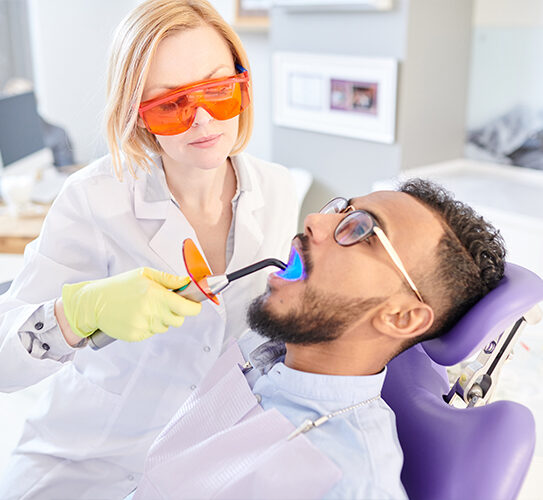

Restorative Dentistry in Katy, Houston, TX
When teeth are damaged, decayed, or missing, everyday tasks can become harder. You may notice trouble chewing, changes in speech, or gaps that affect how your bite fits together. Because every case is different, patients exploring restorative dentistry in Katy, Houston, TX or nearby often benefit from a treatment plan built around function, comfort, and long-term oral health.
Treatment is based on the condition of your teeth, gums, and bite, along with your overall goals for comfort, appearance, and long-term stability. Restorative care may be recommended for several common concerns, including damaged or decayed teeth, difficulty chewing or speaking, gaps between teeth, and tooth loss caused by decay or injury. It can also help patients who are missing multiple teeth or need a more durable way to repair a tooth that has been weakened. A dentist begins with a careful exam, listens to your concerns, and recommends options that match your needs. With the right plan, restorative care can help you eat more comfortably, speak more clearly, and protect the health of the surrounding teeth.
Which Treatments Come Under Restorative Services
Restorative care includes several treatment options. The right choice depends on how many teeth are affected, where they are located, and how much natural tooth structure remains. A dentist may recommend comprehensive restorative dental care that includes repairing damaged teeth, replacing missing teeth, and protecting long-term bite function
Dental Bridges
A dental bridge may be recommended when one or more teeth are missing in the same area. The bridge fills the space with an artificial tooth that is supported by nearby teeth or implants. This helps restore balance to your bite, improve chewing function, and keep nearby teeth from shifting out of place.
Dental Implants
Dental implants help replace missing teeth by acting as artificial roots. A small post is placed in the jawbone and later restored with a crown, bridge, or denture to help rebuild bite function. For patients looking to restore missing teeth with dental implants, this option offers stable support and helps maintain normal oral function over time.
Partial And Full Dentures
Dentures remain an effective option for patients missing several teeth or a full arch. When several teeth are missing, partial dentures can help restore function, while full dentures are used to replace all teeth in the arch. If you need to replace missing teeth with partial and full dentures, custom treatment can help restore chewing ability, support speech, and improve the overall appearance of the smile.
Inlays And Onlays
When a tooth is too damaged for a filling but may not need a full crown, inlays or onlays may be the better option. These custom restorations fit precisely into or onto the damaged part of the tooth. “They may also be used to repair cracked teeth with inlays or onlays when a filling does not provide enough strength. If the goal is to strengthen damaged teeth with inlays and onlays, this approach can reinforce the tooth while preserving more of its natural structure.
Benefits Of Restorative Dental Treatments
When recommended for the right problem, restorative dental treatments can do more than improve appearance. They help support daily function, protect the bite, and reduce the effects of damage or tooth loss on the rest of the mouth.
One important benefit is improved chewing. When teeth are cracked, weak, or missing, biting pressure can become uneven. That can make meals uncomfortable and place added stress on nearby teeth. Repairing or replacing those teeth can help restore a more even bite and make chewing easier.
Speech may also improve when damaged teeth are restored or missing teeth are replaced. Teeth help guide the lips and tongue during speech, so changes in tooth position can affect how certain sounds are formed.
Restorative care helps keep your bite aligned. When a tooth is not replaced, nearby teeth can slowly move into the empty space. Over time, this can affect the way your teeth come together and may make some areas harder to clean. Replacing missing teeth helps maintain spacing and supports a healthier bite. Another important benefit is the ability to protect teeth that still have a healthy structure. In some cases, conservative options such as inlays or onlays can reinforce a damaged tooth without removing as much natural enamel as a full-coverage restoration. That makes treatment both functional and protective.
There is also a cosmetic benefit. Repairing broken or worn teeth and replacing missing ones can make the smile look more complete and balanced. In restorative care, function and appearance often go hand in hand. When the bite is stronger and the teeth are properly supported, the smile usually looks healthier as well.
What To Expect During The Procedure
Treatment begins with a comprehensive restorative dental evaluation. During this visit, the dentist takes a close look at your teeth and looks for any damage or missing areas. This first appointment is also a time to discuss symptoms, concerns, and treatment goals. A careful consultation helps the dentist recommend the right option based on your oral health, function, and budget.
The next steps depend on the treatment being recommended. A bridge usually involves preparing the supporting teeth or implants, taking impressions, and placing the final restoration once it is ready. Implant treatment may include surgical placement, a healing period, and a final restoration after the implant has integrated with the bone. Dentures require impressions and measurements to create a secure, comfortable fit. Inlays and onlays involve removing damaged tooth structure and bonding the custom restoration into place.
Patients should also expect guidance about recovery, home care, and follow-up. Good restorative treatment is not only about placing a restoration. It also includes checking the bite, making sure the restoration feels comfortable, and explaining how to care for it properly. Clear communication at each step helps patients feel informed and supported throughout treatment.
Why Choose Our Dental Clinic
Choosing the right provider matters because restorative care involves diagnosis, treatment planning, and long-term maintenance. A good patient experience starts with a careful exam, a clear explanation of options, and a treatment plan based on oral health, comfort, and function.
It is also helpful to choose a clinic that offers several restorative options in one place. Not every smile needs the same solution. Some patients may benefit from a bridge, while others may be better candidates for implants, dentures, or conservative repair with inlays or onlays. Access to multiple treatment options allows the dentist to recommend care that fits the condition of the teeth instead of forcing a single approach.
Comfort and communication matter as well. Many patients delay care because they are unsure what treatment involves, or they worry that the process will feel overwhelming. When comparing restorative dental services near you, it helps to choose a practice that offers personalized planning, modern treatment methods, and careful follow-up from an experienced dentist serving Houston, TX and nearby Katy, TX. A welcoming setting and a thorough consultation can make restorative care feel more manageable from the start.
Schedule Your Appointment
If you are dealing with damaged teeth, missing teeth, or difficulty chewing, early care can help prevent added stress on the bite and reduce the risk of further problems. For patients considering tooth repair and restoration services, the best first step is an evaluation to identify the cause of the problem and determine the most appropriate treatment. At A+ Family Dental, restorative care includes bridges, implants, dentures, and inlays or onlays, with treatment planning built around comfort, function, and long-term oral health.
FAQ's
This clinical field focuses on rehabilitating oral structures compromised by trauma, decay, or biological wear. At A+ Family Dental, we prioritize the biomechanical integrity of your bite by utilizing durable, medical-grade materials. By returning full functionality to damaged enamel, we ensure that patients can engage in comfortable speech and painless mastication.
Modern protocols involve a range of interventions tailored to the severity of the tooth's condition. Our Houston practitioners employ biocompatible resins for minor cavities and porcelain crowns to reinforce significant structural loss. When addressing missing teeth, we offer fixed bridges or titanium implants to provide a customized recovery plan for every patient.
Red flags often include localized sensitivity to temperature, ease of discomfort while biting, or visible fractures across the tooth's surface. At our Energy Corridor location, we evaluate these symptoms to intercept further degradation before the pulp becomes infected. If you notice a gap in your smile or a jagged edge, professional intervention is necessary to stabilize the affected area.
While aesthetic dentistry focuses on visual symmetry and shade, restorative treatments are primarily therapeutic. The objective of care at our Katy Freeway facility is to eliminate underlying infection and reinforce weak anatomy. However, because we use high-quality ceramics, many of these functional repairs also provide a significant aesthetic benefit, blurring the line between health and appearance.
Securing a personalized strategy begins with a comprehensive diagnostic exam. For families across West Houston, we provide detailed roadmaps to revitalize your oral wellness and prevent future complications. Scheduling a professional evaluation allows our experts to assess bone density and soft tissue health before recommending a durable solution for your specific needs.